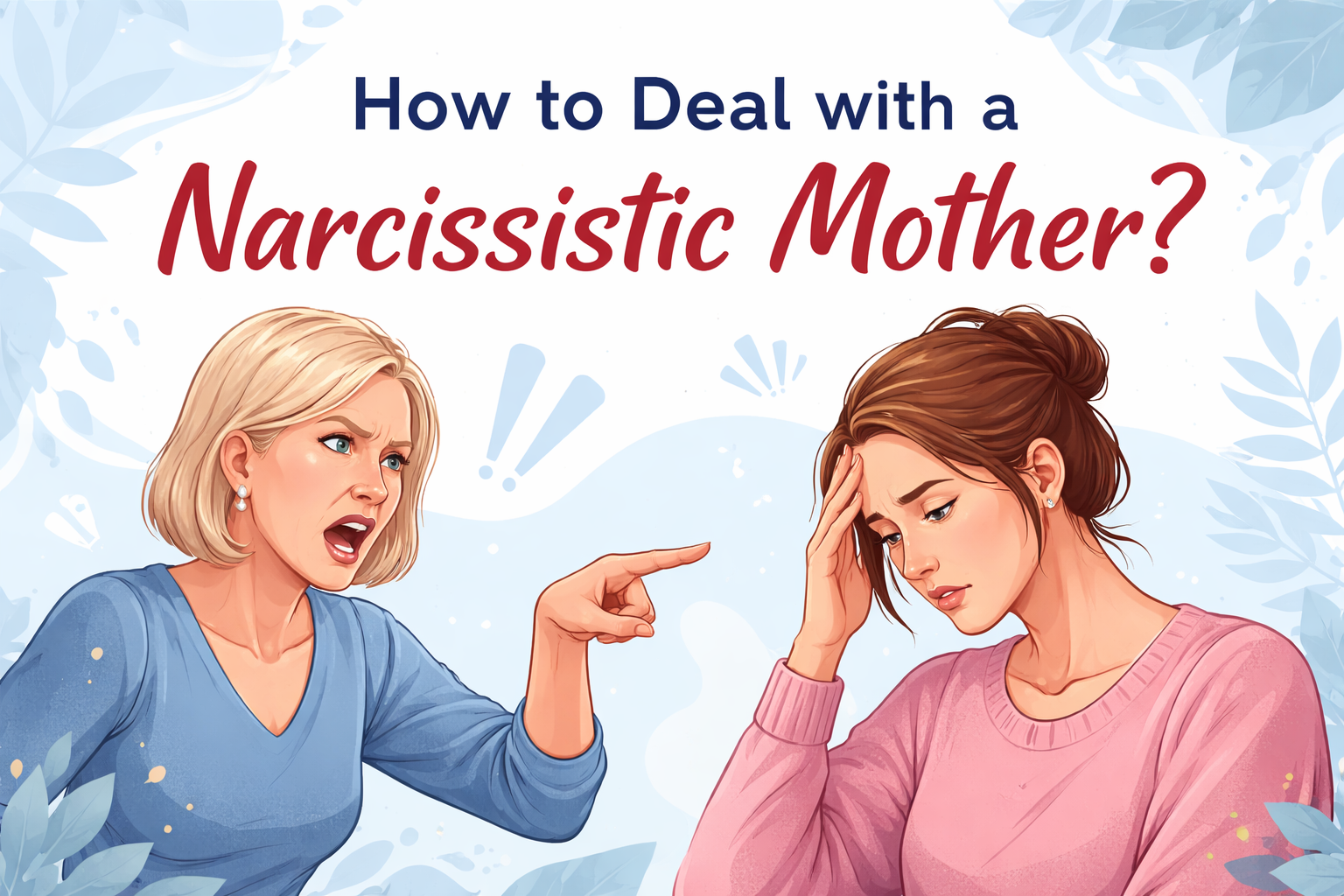
A narcissistic personality refers to a person who is unable to see or understand their own mistakes. They never realize that they might be wrong. Such individuals often live in a fantasy world where everything revolves around them, and they expect perfection in their surroundings. They only want people around them who constantly praise them and agree with everything they say, rather than questioning or challenging their behavior.
People with narcissistic personality traits always seek attention. If you do not give them attention or notice them, they may become angry. Sometimes this anger turns into aggression, emotional drama, or extreme reactions. Living with such a person can become mentally exhausting and emotionally draining. The person dealing with them may start feeling weak, confused, and emotionally disturbed. Over time, the situation becomes so overwhelming that the person may feel hopeless and think, “Either end my suffering or change this person, God.”
However, in most cases, neither of these things happens. Narcissistic individuals rarely change unless they willingly seek professional help, and the people living with them often find it very difficult to leave due to emotional, social, or family responsibilities.
A narcissistic person can be anyone — male or female. It is not limited to one gender. Let’s understand this from the beginning.
History of Narcissism
The term narcissism is derived from Narcissus, a character from Greek mythology, which was described by the Roman poet Ovid in his famous work Metamorphoses, written around 8 AD. In the third part of the poem, the story of Narcissus is told. He was a beautiful young man who rejected many people who fell in love with him.
One day, Narcissus rejected a nymph named Echo, who had been cursed to only repeat the words of others. As punishment, the gods made Narcissus fall in love with his own reflection in a pool of water. When Narcissus realized that the person he loved could never love him back, he slowly became weak and died while staring at his reflection.
The idea of extreme self-love has been recognized throughout history. In ancient Greece, this concept was known as hubris, which meant excessive pride and self-importance.
In the late 19th century, narcissism began to be defined as a psychological term. Since then, the meaning of narcissism in psychology has changed and developed over time. It has been used to describe:
a sexual disorder
a normal stage of human development
a symptom of mental illness
and a personality trait in psychological theories
In 1889, psychiatrists Paul Näcke and Havelock Ellis independently used the term narcissism to describe a person who treated their own body in the same way a person usually treats a sexual partner. At that time, narcissism was considered a disorder that could negatively affect a person’s sexual life.
In 1911, Otto Rank published the first clinical paper on narcissism and connected it with vanity and self-admiration.
What is a Narcissistic Mother?
So far, we have understood the beginning and history of narcissism. Now let’s talk about what a narcissistic mother is.
A narcissistic mother is a person who suffers from Narcissistic Personality Disorder (NPD), but she is usually not aware of it. In most cases, family members also do not understand this condition. They often think, “This is just her nature” or “Her mind works like this.”
In reality, a narcissistic person is struggling internally, but they do not realize that their behavior is hurting others. They remain focused on themselves and their own thoughts, without understanding the emotional pain of the people around them. The world outside does not affect them much, except for the people who live with them daily, such as their children and husband.
A narcissistic mother can hurt her children and husband emotionally because she always causes problems, drama, and tension in the house, even over small things that could be easily fixed.
For instance, if a kid says to their mum, “These clothes don’t look good on you,” a normal mum might think of it as a suggestion or simple feedback. A narcissistic mother might think, “My child is calling me fat or making fun of me.” She might overreact, make things worse, and turn a small comment into a big fight that lasts for days or even a week.
Family members are often too scared to say anything because of this. They don’t want to talk or give their opinions because they are afraid it will start fights or arguments. People who live with a narcissist are always on edge, afraid that even the smallest thing they say will set them off.
A narcissistic person often starts fights and makes people feel bad, even when they are trying to stay calm. This makes the house a stressful and uncomfortable place to be, where everyone feels tired mentally.
Signs of a Narcissistic Mother
Constant Criticism
A narcissistic mother constantly puts others down, even her husband. For her, only self-image matters. She always tries to show herself as the best and others as inferior, which causes emotional pain and distress to her children and family members. One of her biggest traits is twisting your words and situations to make you look wrong and prove herself right.
Not being able to feel for others
A narcissistic mother does not care about or understand how her children or husband feel or what they are going through. A narcissistic mother will often talk about her own problems and make the conversation about herself instead of listening to you and helping you. She often doesn’t show empathy, and it’s hard for her to connect with other people’s problems on an emotional level.
Controlling Behavior
A narcissistic person usually has controlling behavior and always wants everyone to follow their instructions, whether it is family members or people outside the home. They consider themselves superior and believe that they are always right. They try to control situations and people to maintain their authority and self-image.
They also make sure that others do not realize that they are creating problems. In front of outsiders, they behave very politely and appear kind and respectful, but their controlling and problematic behavior is mostly directed toward their family members at home.
Emotional Manipulation
Emotional manipulation is a common trait in narcissistic individuals and works like a tool that keeps the people around them trapped in a loop. A person living with them often feels stuck, unable to live peacefully with them and unable to leave them as well. In most cases, emotionally sensitive or vulnerable people become the main targets of this behavior because narcissistic individuals know how to control and hold on to them. They understand how to use emotions to keep others attached and dependent, and they continuously manipulate them in ways that slowly weaken them mentally and emotionally.
Always Wanting Attention
A narcissistic person cannot live without attention and always wants to be the center of focus. If you do not give them attention, they may create unnecessary drama and emotional reactions. They constantly like to hear praise, such as being told that they look beautiful, that no one is better than them, or that no one can take care of the children like they do. If you are living with such a personality, you should understand that they expect constant appreciation and praise if you want to maintain peace.
How a Narcissistic Mother Affects Children
She is often unable to understand the feelings of her children or other family members. Because of a narcissistic mother, the home environment becomes stressful, and no one is able to live with peace of mind. This kind of mother creates constant problems and drama without any clear reason, which leads to mental stress for everyone in the family. Especially children struggle to study calmly; their emotions get affected, and they often face academic anxiety.
Ways to Deal with a Narcissistic Mother
Set your boundaries clearly and do not let them overpower you. If they are doing something wrong, say no clearly and firmly; no means no.
Avoid Arguments and Emotional Reactions
Do not get pulled into any drama with them, no matter how much they provoke you, and try to stay away from conflicts. Instead of reacting emotionally, handle the situation calmly and use your mind to respond wisely.
Focus on Self-Care
Focus on your mental health by joining a yoga group or spending time with a friend circle where you feel comfortable and happy, and try to limit the time you spend with them.
Limit Personal Sharing
Share fewer personal details so they cannot use them against you or make fun of them later.
Stay Calm and Emotionally Strong
Control your emotions and stay calm, practice meditation, and if you feel very weak or overwhelmed, contact a therapist or counselor.
Protect Your Mental Health
Keep your mental peace as a priority. Mental health is always precious, and you should not waste your energy arguing with them. If you feel they are provoking you and dragging you into a fight, leave the place, as this can be an easy way to protect your mental health.
When to Create Distance
Whenever you feel drained and mentally tired, listen to a peaceful song and go outside, and especially try to build a connection with nature. Nature is calming and can help you heal as soon as possible.
Healing and Moving Forward
For healing, join a gym, yoga classes, or a happiness group so you can feel valued and not ignored. Meditation is one of the best ways to help yourself heal. Moving on is not easy for a victim, but it is possible; you can seek help from a therapist to learn techniques to stay calm and recover. Choose one trusted friend with whom you can share your thoughts, whether negative or positive, as this can be a helpful way to express your feelings and feel better over time.
Conclusion
Narcissism is a mental disorder that can be treated, but only if the narcissistic person is willing to understand and accept that they have a problem. In many cases, there is limited evidence of complete recovery because narcissistic individuals often do not recognize their condition. Most cases end in separation or divorce, which leaves children and family members suffering. If you feel stuck with this kind of person, you should consult a therapist or counselor for proper guidance and support.


