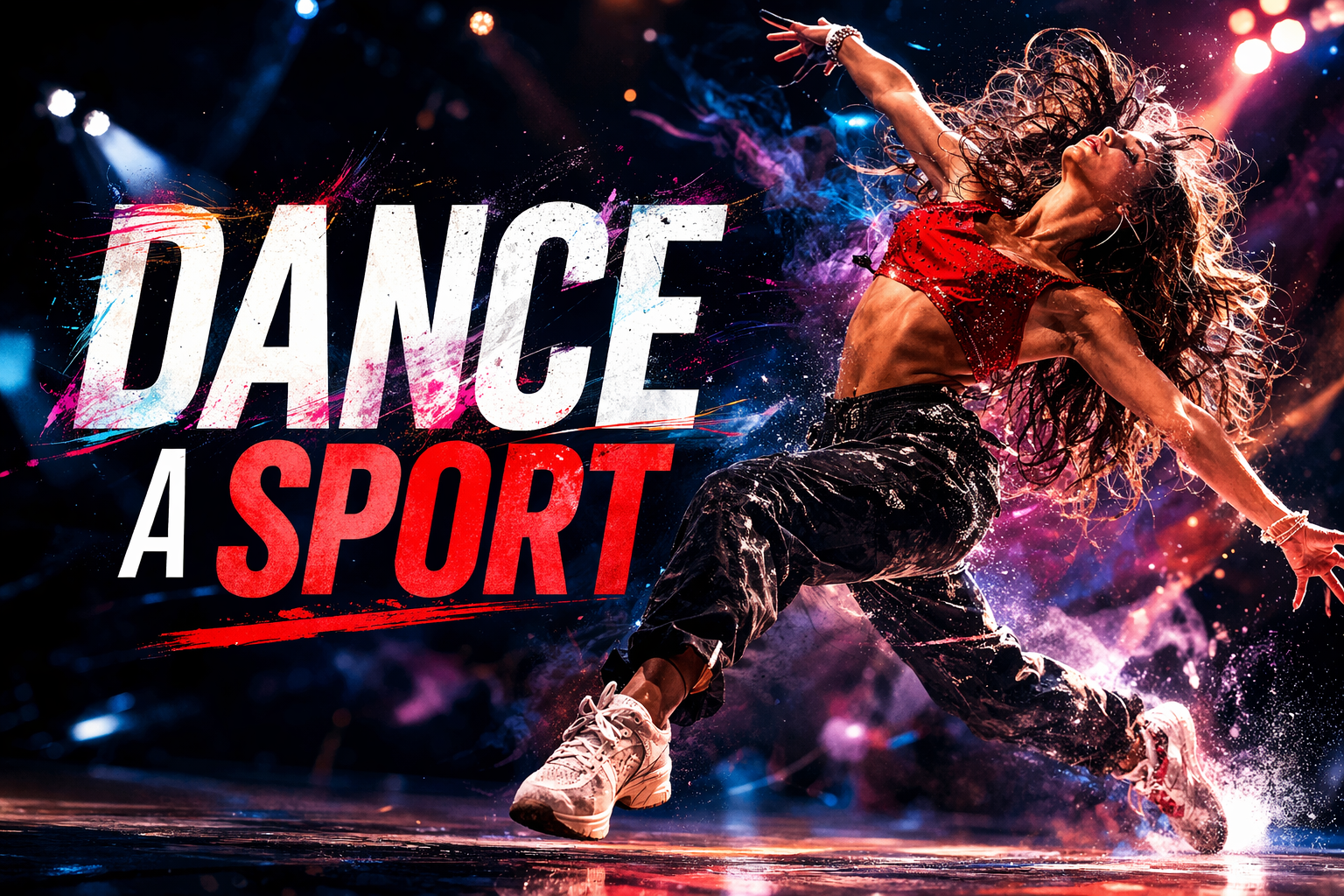
More Than Art: Why Dance is the Ultimate Performance Sport
Ask a marathon runner about their “wall” and they’ll describe a moment of sheer physical exhaustion. Ask a dancer about the final minute of a high-speed jazz routine, and they’ll describe the exact same thing—except they have to smile through it.
For years, we’ve siloed dance into the “arts” category, tucked away from “real” sports like soccer or basketball. But if you strip away the sequins and the stage lights, you’re left with an elite athlete who possesses the explosive power of a sprinter and the core stability of a gymnast. At its heart, dance isn’t just an art form; it’s a high-stakes, high-intensity performance sport.
The Physics of the “Perfect” Step
When a dancer leaps across a studio floor, they aren’t just “moving.” They are navigating complex physics. A grand jeté requires the same explosive leg power as a vertical leap in basketball. The difference? The dancer must land silently, in perfect alignment, and immediately transition into the next movement.
Cardiovascular Grit
A common misconception is that dance is “light” activity. In reality, a three-minute contemporary or hip-hop piece is a sustained burst of anaerobic activity. Research on professional dancers often shows that their heart rates peak at the same levels as those of top middle-distance runners. Proper training helps kids build this kind of stamina, making sure they have the lung capacity and endurance they need for any sport.
Coordination of the Whole Body
A pitcher only has to think about their arm, and a soccer player only has to think about their feet. A dancer has to control every part of their body at the same time. This requires a level of “proprioception”—the body’s ability to sense its location in space—that is rarely matched in traditional sports.
The “Training Camp” Mentality
Athletes are defined by their preparation. If you look at the schedule of a dedicated dancer, it mirrors a professional training camp.
-
Drills and Conditioning: Much like a football team runs ladder drills, dancers spend hours at the barre. This isn’t just about grace; it’s about building the microscopic muscle control needed to prevent injury.
-
Flexibility as a Weapon: In dance, flexibility isn’t a “bonus”—it’s a requirement. Achieving the range of motion needed for an arabesque or a leg extension takes years of disciplined stretching, similar to the mobility work seen in Olympic gymnastics.
-
The Technical Grind: Every style, from Tap to Acro, has its own set of technical “plays.” Learning these is as hard on your brain as learning a complicated NFL playbook.
Competition: The Proof in the Points
If a sport is defined by organized competition and scoring, dance fits the bill perfectly. The competitive dance world is a massive, multi-billion dollar industry where athletes are judged on:
-
Technical Excellence: Did the heel touch the floor? Was the rotation centered?
-
Difficulty Rating: Much like diving or figure skating, the more complex the “trick,” the higher the potential score.
-
Team Synchronization: Moving in perfect unison with ten other people while traveling at high speeds requires a level of teamwork and communication that is fundamentally athletic.
The Mental Toughness of a Performer
We often talk about the “clutch” gene in sports—the ability to perform when the game is on the line. Dancers live in that “clutch” moment for the duration of every performance. There are no timeouts in a dance routine. If you fall, you have a fraction of a second to recover without breaking character.
This builds a unique brand of resilience. It transforms students into confident performers who can handle the pressure of a stage, a judge’s critique, or a difficult new skill. This mental health benefit is perhaps the most valuable “stat” a young athlete can earn.
Why Parents are Trading Cleats for Dance Shoes
Parents are increasingly realizing that dance offers a “hidden” athletic advantage. It’s a total-body workout that doesn’t feel like a chore because it’s fueled by music and creativity. Whether a child is in Ballet, Hip Hop, or Jazz, they are gaining:
-
Injury Prevention: Learning how to fall and land correctly protects kids in other playground activities.
-
Social Agility: The “locker room” bond of a dance troupe is as strong as any sports team, building social skills and lasting friendships.
-
Focus: The discipline required to take care of your gear and show up ready to work is a life skill that translates to the classroom and beyond.
Frequently Asked Questions (FAQ)
Is dance as hard as “traditional” sports? In terms of caloric burn and muscle engagement, yes. In many cases, the lack of “breaks” in a dance routine makes it more cardiovascularly demanding than sports with frequent stoppages like baseball.
Will dance help my child in other sports? Absolutely. Many professional athletes cross-train in dance to improve their footwork, balance, and explosive power.
What is the “sportiest” style of dance? All styles are athletic, but Acro and Hip Hop often feel the most like traditional sports due to the high-impact tricks and stamina required. Ballet is often compared to a “marathon” because of the sustained muscle tension.
Do dancers get “sports injuries”? Yes. Dancers experience similar injuries to other athletes, such as sprains or cramping. This is why proper instruction and “warm-up” culture at a professional studio are vital.
Is it too late for my child to start this “sport”? Never. It is almost never too late to start. Whether they are a toddler or a tween, the athletic benefits begin the moment they step into the studio.
Conclusion: Redefining the Arena
It’s time to retire the idea that sports only happen on a field with a ball. The “arena” for a dancer is the stage, and their “game” is a three-minute masterpiece of physical defiance.
In the studio, we don’t just teach steps; we train athletes. We build the strength, determination, and competitive spirit that make a champion. Is dance a sport, then? Yes, it’s the best sport there is if it takes hard work, practice, competition, and a strong will.