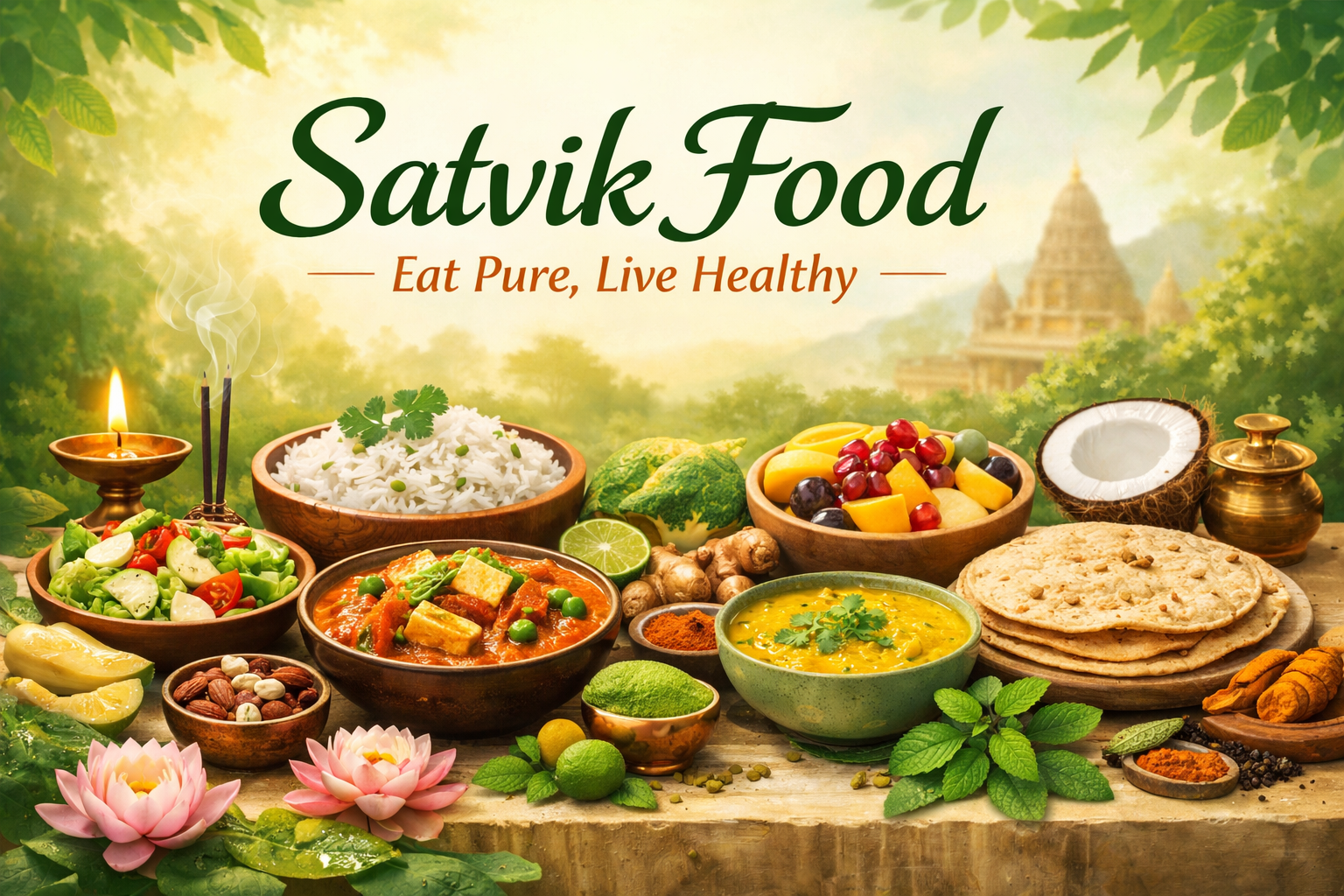
Satvik food has been followed since ancient times and is beneficial for health. According to Ayurveda, it is considered the best diet. Satvik food means using natural and unprocessed ingredients like fruits, vegetables, and nuts, which are foods obtained directly from nature. Satvik food does not include meat, garlic, onion, eggs, or fish. It does not contain any stimulating or aggressive foods. Therefore, Satvik food is considered pure and calming for the mind. Nowadays, fast food and non-vegetarian food are trending everywhere, but Satvik food is the kind of diet that keeps you away from diseases, maintains your health, and gives a natural glow to the face of those who follow it. Satvik food is mostly consumed in India and has been followed since the time of our ancient sages and saints.
Food that is satvik is clean and fresh, which is good for your health and boosts your immune system. It’s easy to digest and doesn’t make you gain weight because it’s light.
Let’s take a look at its main benefits:
Satvik food is light and easy to digest, which helps keep gas, acidity, and constipation from happening. It keeps the stomach healthy.
Mental Peace: This simple food keeps the mind calm and doesn’t have any fake spices or heavy ingredients, so it doesn’t make the mind work harder. People who meditate a lot will find it very helpful.
Energy: This food is natural, so it gives you more energy and keeps your body strong.
Immunity: It has a lot of vitamins and minerals that help the body stay healthy and fight off sickness.
Weight Control: Satvik food has very few calories, so it’s a great way to keep your weight in check and control it.
What should you add to Satvik food?
Fruits and vegetables that are in season, like green vegetables and fruits.
Grains and Pulses: Moong dal, sprouted grains, and porridge (dalia).
Nuts and seeds include almonds, cashews, and raisins.
Cow ghee (also called desi ghee), fresh milk, and curd are all dairy foods.
What to Avoid? Onion, garlic, meat, fish, fried food, fast food, white sugar, caffeine (tea/coffee), and stale food are not considered Satvik.
Satvik Meal Ideas
In the Morning:
You can try poha with peanuts and lemon, but avoid onion.
Oats.
Add sprouts to salad.
Fresh fruit smoothie.
For Lunch:
Add seasonal vegetables like bottle gourd, ridge gourd, and pumpkin, and have roti with ghee.
Brown rice or jeera rice with greens.
Snack in the evening:
Roasted nuts or makhana.
Sweet potato tikki or sweet potato chaat.
Fresh buttermilk or herbal tea.
Dinner:
Veg soup.
You use rice and moong dal to make khichdi.
Salad with roasted vegetables and paneer.
Important Aspects of Satvik Food:
Eat food that has just been cooked.
Add rock salt (sendha namak) to your food.
Cook with love and a clear head.
Cooking Techniques for Satvik Food
The goal of Satvik cooking is to make fresh, seasonal, vegetarian food in a clean and peaceful way that boosts prana (life energy). It cooks food in a simple and gentle way, like by steaming, boiling, or slow cooking. They use healthy fats like ghee or cold-pressed oils and stay away from onions, garlic, and deep-fried foods so that the food stays pure, light, and easy to digest.
Important Satvik Cooking Methods
Being Mindful Before You Start:
A clean kitchen and calm environment make the food tasty and full of positive energy. Always maintain proper hygiene.
Soft Ways to Cook:
For nutrient-rich food, avoid deep-frying or cooking on high heat. Food takes time to cook, so give it proper time and do not rush.
Tadka:
Use a little oil or desi ghee and avoid heavy spices; use mild spices like cumin, turmeric, and ginger for better taste and digestion.
Soaking Beans and Grains:
Soaking beans and grains makes them soft before cooking on the stove. Soaking is a natural and healthy process for better digestion.
Use Fresh Ingredients:
Always use fresh ingredients and avoid artificial colors and spices if you want natural taste and nutrition.
Easy Seasoning:
For natural taste, avoid strong spices. You can use rock salt, lemon juice, and fresh herb leaves instead.
Satvik Lifestyle Beyond Food
What Does it Mean to Live Satvik?
At its heart, a Satvik lifestyle is about finding “Satva”—the state of being calm, clear, and harmonious. It’s the feeling you get when you’ve had a great night’s sleep, eaten a meal that didn’t leave you bloated, and feel genuinely kind toward the people around you. It’s not just a diet; it’s a way of honoring your life.
Food that Heals
Instead of counting calories or obsessing over “forbidden” foods, think of nutrition as a way to love your body. It’s about eating things that are alive and fresh—fruits, vegetables, grains, and nuts. When you move away from heavy, processed foods and stimulants like caffeine, you aren’t “losing” anything; you’re gaining a mind that isn’t foggy and an energy level that doesn’t crash by 3:00 PM.
Catching the Morning Light
There is a specific kind of peace that exists before the rest of the world wakes up. By rising early and stepping into the sunlight, you’re syncing your internal clock with nature. It’s about starting the day on your own terms with a sense of quiet power, rather than waking up to a loud alarm and a stressful phone screen.
Moving with Purpose
Exercise doesn’t have to be a punishment. In a Satvik life, movement is a celebration of what your body can do. Whether it’s a flow of Yoga, a few Sun Salutations, or a simple walk, the goal is to get your energy (or Prana) moving so you don’t feel stagnant or stiff.
Restoring Your Soul
We often underestimate the power of “sleep like a baby.” Deep, restorative rest is when your body does its best repair work. Satvik living encourages a wind-down routine—disconnecting from tech and calming the mind—so that when you hit the pillow, your sleep is actually healing you, not just passing the time.
A Heart That Is Mindful
This is where the way of life goes beyond the body. It’s about: Awareness: Taking time to remember who you are when you’re not busy with all your “to-do” lists. Connection means being around people who make you feel good and being that person for other people. Surrender means giving up the need to control everything that happens. It’s the understanding that you can control your effort but find peace by going with the flow of life.
Common Misconceptions About Satvik Diet
It’s a common mistake to think that eating Satvik means living on boiled, flavorless mush or cutting out everything “fun.” Most people assume it’s a diet of deprivation, but it’s actually about vitality.
Here’s the reality behind the most common myths.
Myth vs. Reality
1. It’s bland and boring.
The Truth: Just because there’s no onion or garlic doesn’t mean there’s no flavor. Satvik cooking uses a rainbow of spices like ginger, cumin, cinnamon, cardamom, and fresh herbs. It’s about tasting the actual food rather than drowning it in heavy sauces or overwhelming spice.
2. You won’t get enough protein.
The Truth: This is a big one, but it’s simply not true. Between lentils, chickpeas, mung beans, nuts, seeds, and fresh dairy (if you choose to include it), there is plenty of fuel for your muscles. It’s a clean kind of protein that doesn’t leave you feeling sluggish or heavy.
3. It’s expensive or complicated.
The Truth: It’s actually the opposite. Satvik living is about simplicity. It relies on what is local, seasonal, and cheap—like grains, beans, and whatever fruit is growing right now. You’re spending less on expensive meats and processed “health” snacks and more on basic, whole ingredients.
4. It’s only for monks or yogis.
The Truth: You don’t have to live in a cave to eat this way. Whether you’re a student, a parent, or an athlete, anyone can benefit from food that makes your mind sharper and your digestion smoother. It’s a lifestyle tool, not a religious requirement.
5. If it’s vegetarian, it’s Satvik.
The Truth: Not necessarily! A greasy plate of fries or a spicy, oily curry might be vegetarian, but they aren’t Satvik. In this lifestyle, freshness matters. Satvik food is cooked with love and eaten soon after; it isn’t something that’s been sitting in a freezer or deep-fried until the nutrients are gone.
The “Onion and Garlic” Question
People always ask: “What’s wrong with garlic?” It’s not that they are “bad” for your body in a physical sense. It’s about how they affect your mood. Think of onions and garlic as “loud” ingredients—they are stimulants that can make the mind restless, irritable, or even dull. If you’re trying to find a sense of inner peace and steady focus, cutting them out is like turning down the “background noise” in your brain.
Tips to Transition to a Satvik Diet
Making the switch to a Satvik diet doesn’t mean you have to throw out everything in your kitchen by tomorrow morning. It’s a gentle shift toward eating fresh, natural foods that give you steady energy without making you feel heavy or anxious.
Here is how you can make the transition easily.
1. Take Baby Steps
Don’t rush: If you change everything overnight, you’ll probably burn out. Start by changing just one meal—like breakfast—and see how you feel.
The morning swap: Instead of sugary cereal or heavy toast, try starting your day with fresh fruit, some overnight oats, or a handful of soaked almonds.
Instead of quitting coffee or processed snacks all at once, cut back a little bit each week.
2. What to Put on Your Plate
Instead of worrying about what you’re cutting out, focus on adding the good things:
Fresh is best: Eat a lot of colorful fruits and vegetables that are in season.
Think of hearty grains and beans that are easy to digest, like yellow mung dal, rice, oats, millet, and lentils.
For smart fats and natural sweets, use a little ghee or cold-pressed coconut oil. If you want something sweet, don’t use white sugar. Use raw honey, jaggery, or dates instead.
Gentle spices: You can make food taste amazing using mild spices like turmeric, ginger, cumin, and cardamom. They add flavor and help your digestion.
3. What to Gently Phase Out
In the Satvik tradition, certain foods are thought to either make the mind restless or make the body feel sluggish:
Meat, fish, and eggs: A Satvik diet is purely plant-based and vegetarian.
Stimulants: This includes caffeine (coffee and strong tea) and alcohol.
The “loud” flavors: Strong spices, hot chilies, onions, and garlic are left out to keep the mind calm.
Packaged foods & leftovers: Try to avoid frozen meals, canned foods, and heavy preservatives. The golden rule here is to eat food that is freshly cooked.
4. How You Eat Matters as Much as What You Eat
Slow down: Turn off the TV, put away your phone, and actually taste your food. Chewing thoroughly makes a massive difference in how your stomach feels afterward.
Check your mood: Try not to eat when you are angry, stressed, or rushing. The vibe you have while eating actually affects your digestion.
The 50/25/25 rule: A great Satvik guideline is to fill your stomach half-full with food, a quarter with water/liquid, and leave the last quarter empty so your body has room to digest.
Finish early: Try to eat your last meal of the day at least 2 or 3 hours before you go to bed so you aren’t digesting heavy food while trying to sleep.
5. It’s a Vibe, Not Just a Diet
Cook with love: It sounds a bit cliché, but try to cook when you’re in a good mood. The energy you put into making a meal carries over to the people eating it.
Swap your salt: Trade standard table salt for rock salt (sendha namak)—it’s much gentler on the body.
Conclusion: Eat Pure, Live Healthy
Think of “Eat Pure, Live Healthy” as the ultimate rule for how you feel from the moment you wake up. It’s the simple idea that your body is a reflection of what you put into it—your physical energy and your mental peace are both built from the quality of your food.
Here’s how that works in real life:
Quality In, Quality Out
Your body is like a high-performance engine. If you fuel it with clean, natural things—like crisp fruits, seasonal vegetables, whole grains, and simple proteins—it’s going to run smoothly. This isn’t just about “filling the tank”; it’s about building a solid immune system and having the kind of steady energy that stays with you all day, without the typical afternoon crash.
Protecting Your Future
Eating “pure” is the best health insurance you can get. By sticking to natural, nutrient-dense foods, you’re doing more than just satisfying hunger—you’re actively protecting yourself. It’s a powerful way to ward off long-term issues like heart disease or diabetes before they ever get a chance to start.
The Mental Connection
It’s not just your body that feels the difference; your mind does, too. When you cut out the junk and eat clean, the mental “fog” starts to lift. You’ll likely find yourself feeling sharper, less anxious, and more emotionally balanced throughout the day.
The Bottom Line: You don’t need a complicated manual to be healthy. Just try to eat things that are as close to their natural state as possible. When your food is pure, your life naturally follows suit.
FAQs
1. Will I get enough protein without meat or eggs?
Absolutely. You get plenty of high-quality protein from lentils (dals), chickpeas, mung beans, nuts, and seeds. If you include dairy, fresh milk and homemade curd are also great sources. The key is variety—mixing your grains and beans gives your body everything it needs to stay strong.
2. Why no onion or garlic? I thought they were healthy.
In many diets, they are! But in a Satvik lifestyle, we look at how food affects the mind, not just the body. Onions and garlic are “stimulants.” They can make your mind feel restless, agitated, or even aggressive. If you’re aiming for a calm, meditative headspace, cutting them out is like hitting the “mute” button on mental noise.
3. Is Satvik food just boiled vegetables?
Not at all. Satvik food is about flavor, not blandness. You use a beautiful palette of spices like ginger, turmeric, cumin, cinnamon, and fresh herbs. The goal is to make food that is delicious and satisfying without using heavy oils or “angry” spices like extreme red chili.
4. Do I have to wake up at 4:00 AM to be Satvik?
You don’t have to, but rising with or before the sun (Brahma Muhurta) is highly recommended. There is a specific kind of peace in the air at that time. If 4:00 AM feels impossible, just try waking up 30 minutes earlier than usual and spending that time in quiet or sunlight rather than on your phone.
5. Can I eat out at restaurants?
It can be tricky because most restaurants use a lot of onion, garlic, and heavy oils. However, you can still make better choices. Look for steamed dishes, fresh salads (without heavy dressings), or simple lentil soups. The “purest” way is to cook at home, but don’t stress—just do the best you can with the options available.
6. Why are leftovers discouraged?
The idea is to eat food that is full of Prana (life energy). Freshly cooked food has the most energy. After about 3 hours, that energy starts to fade. In a modern world, we can’t always be perfect, but try to cook smaller portions so you can eat them fresh rather than relying on a week’s worth of meal prep from the fridge.
7. Is it an expensive lifestyle to maintain?
Actually, it’s usually cheaper. You aren’t buying expensive meats, packaged “superfoods,” or pricey supplements. You’re buying basic, seasonal produce, grains, and beans from the local market. It’s a return to the basics.
8. Can I still drink tea or coffee?
Satvik living encourages moving away from caffeine because it’s a stimulant that causes energy “spikes” and “crashes.” Try swapping your morning coffee for herbal teas, warm lemon water, or fresh fruit juice. You’ll find your natural energy is much more stable.