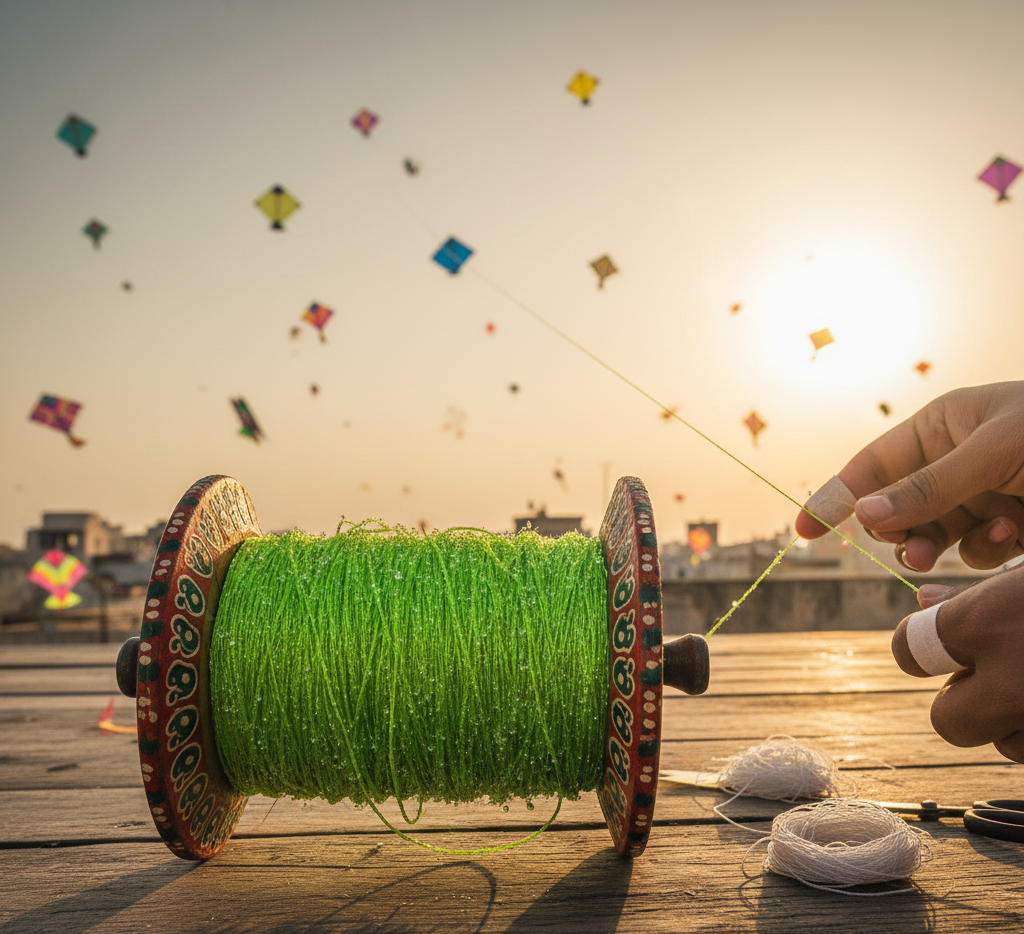
If you’ve ever stood on a terrace during Makar Sankranti or a breezy Sunday afternoon, you know that kite flying isn’t just a hobby—it’s a sport, a tradition, and a bit of a science. While the kite gets all the glory for its colors and shapes, the real hero of the story is the kite thread.
The thread is your steering wheel, your brake, and your weapon. But if you walk into a market today, you’ll be overwhelmed by choices: Manjha, Saddi, Cotton, Polyester, 6-cord, 9-ply… the list goes on. Choosing the wrong one doesn’t just mean losing your kite; it can mean a frustrating day of tangled lines or, worse, safety hazards.
In this guide, we’re going to break down everything you need to know about kite thread so you can fly higher and cut cleaner.
1. Understanding the Types: Manjha vs. Saddi
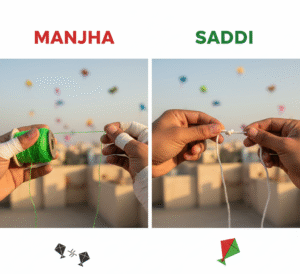 In the world of kite flying, there are two main “players” when it comes to the line:
The “Saddi” (Plain Cotton/Polyester Thread)
Saddi is the plain, untreated thread. It’s what you use for the first few meters of the kite (the kanni or bridle) and for the tail end of the spool.
-
Why use it? It’s soft on the hands. When you’re letting the kite out (dheel), saddi won’t cut your fingers.
-
Problem Solving: Many beginners try to fly with 100% Manjha. This is a mistake. If the kite pulls hard, the sharp Manjha will slice your skin. Always use a few meters of plain cotton kite thread at the start.
The “Manjha” (Coated/Abrasive Thread)
This is the “fighter” thread. Traditionally, it’s a cotton thread coated with a mixture of glue and powdered glass.
-
The Goal: In a kite fight (pench), the goal is to rub your thread against your opponent’s until theirs snaps.
-
Modern Variations: Today, you see “Mono Kites” or “Plastic Manjha” (made of nylon/monofilament). While these are incredibly strong, many regions have banned them because they don’t break easily and can harm birds or commuters. For a responsible experience, stick to high-quality cotton-based Bareilly Manjha.
2. Plys and Cords: What do the Numbers Mean?
When you look at listings (like those on IndiaMART), you’ll see terms like “6-cord,” “9-ply,” or “12-reel.”
-
The “Ply” or “Cord”: This refers to how many individual strands of thread are twisted together to make the final line.
-
6-Ply: Light and thin. Great for small kites and low-wind conditions. It travels through the air faster.
-
9-Ply: The “All-Rounder.” Most professional flyers prefer a 9-ply kite thread because it offers the best balance between strength and weight.
-
12-Ply: Heavy-duty. Used for massive kites or extremely high winds. It’s hard to cut, but it’s also heavy, which can make your kite sag.
-
3. How to Spot High-Quality Thread
Not all thread is created equal. A “cheap” spool can have knots, uneven coating, or weak spots that snap under the slightest pressure. Here is what to look for:
-
The Stretch Test: Take a meter of thread and pull it. A good cotton kite thread should have a tiny bit of “give” but shouldn’t stretch like a rubber band. If it stretches too much, you’ll lose control of the kite’s movements.
-
The Coating Consistency: Run your fingers (carefully!) over a Manjha. It should feel consistently abrasive, like fine sandpaper. If you feel “lumps” of glue, it will get stuck in the pulleys or your hand.
-
The Color Bleed: High-quality dyed polyester or cotton threads (like the ones from Bareilly or Jaipur) shouldn’t leave heavy stains on your hands the moment they get a little damp.
4. Common Problems & Expert Solutions
Problem: The “Tangle” Nightmare
You’re in the middle of a fight, and suddenly your thread bunches up into a “bird’s nest.”
-
The Solution: This usually happens because of a cheap plastic spool or uneven winding. When you buy a “Charkhi” (spool), ensure the thread is wound under tension. If you feel loose loops on the spool, rewind it yourself before heading to the terrace.
Problem: The Thread Snaps at the Kite
The kite just flies away without a fight.
-
The Solution: Check your Kanni (the bridle). If the knots are too tight or the thread is too thin for the kite size, the friction will snap it. Always use a slightly thicker, plain cotton thread for the bridle than the main line.
Problem: Friction Burns
-
The Solution: Professional flyers often use “tape” or “finger guards.” Even the best kite thread will cut you if the kite dives suddenly. A simple piece of medical tape on your index finger can save you a lot of pain.
5. Maintenance: Making Your Spool Last
Kite flying seasons come and go, but your thread can last years if stored properly.
-
Keep it Dry: Moisture is the enemy of cotton thread. It softens the glue and makes the Manjha lose its sharpness. Store your spools in a dry, dark place.
-
Avoid Sunlight: Prolonged UV exposure makes polyester and cotton brittle. Don’t leave your charkhi on the terrace after the sun goes down.
-
The “Box” Method: As seen in premium listings like Farmood Beg, quality thread often comes in a carton or box. Keep that box! It prevents the outer layers of the thread from getting frayed or dusty.
Frequently Asked Questions (FAQs)
Q: Is 3000 meters of thread enough for a season? A: For a casual flyer, 3000m (often called a 6-reel or 12-reel depending on the brand) is plenty. However, in competitive “pench,” you can lose 50–100 meters in a single fight!
Q: What is the difference between Wooden and Plastic Spools (Charkhi)? A: Wooden spools are traditional and offer better balance, which helps in letting out the thread faster. Plastic spools are cheaper and lighter, but they can crack if dropped.
Q: Why is Bareilly thread so famous? A: Bareilly (in Uttar Pradesh) has been the hub of kite thread manufacturing for centuries. Their artisans have secret recipes for the “masala” (coating) that make the thread incredibly sharp yet durable.
Q: Can I use sewing thread to fly a kite? A: Only for very small, light paper kites indoors or in zero wind. For outdoor flying, sewing thread is too weak and will snap the moment a breeze hits the kite.
Choosing Based on Your Location
In India, the type of thread you need depends on where you are flying:
-
Jaipur/Ahmedabad: High wind areas. Go for High Strength 9-ply cotton.
-
Punjab/Delhi: Competitive areas. Look for Automatic Charkhi Manjha with high breaking strength (approx. 5kg).
-
Coastal Areas (Mumbai/Chennai): Humidity is high. Use Polyester-mix thread as it doesn’t get “soggy” like pure cotton.
A Note on Safety
Kite flying is a joy, but the thread can be dangerous. Always fly in open spaces away from power lines and busy roads. If your kite thread gets stuck in a tree or on a wire, don’t pull it—cut it as close as possible to prevent it from hanging down and hurting birds or cyclists.


