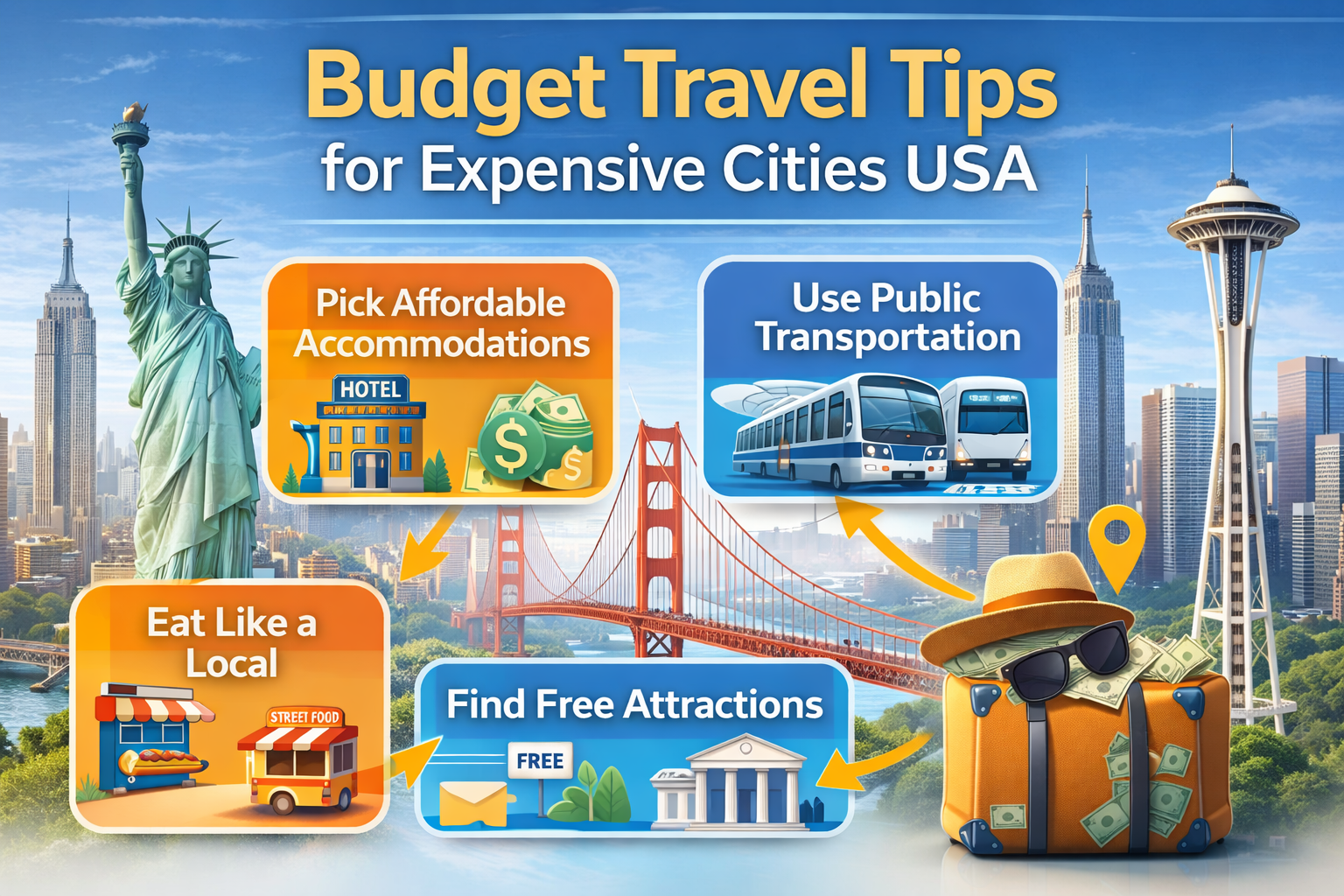
Let’s be real: the sticker shock of a weekend in Manhattan or a few nights in San Francisco can be enough to make you cancel your flight. In 2026, with the cost of living hitting new highs, the idea of an “affordable” trip to a major American hub feels like a myth.
However, there is a massive difference between what a tourist pays and what a local spends. If you travel like a visitor, you’ll go broke. If you travel like a resident, you’ll find that even the most expensive cities in the USA have “cheat codes” for your wallet.
Here is how to hack your way through the most iconic, high-priced destinations in the country.
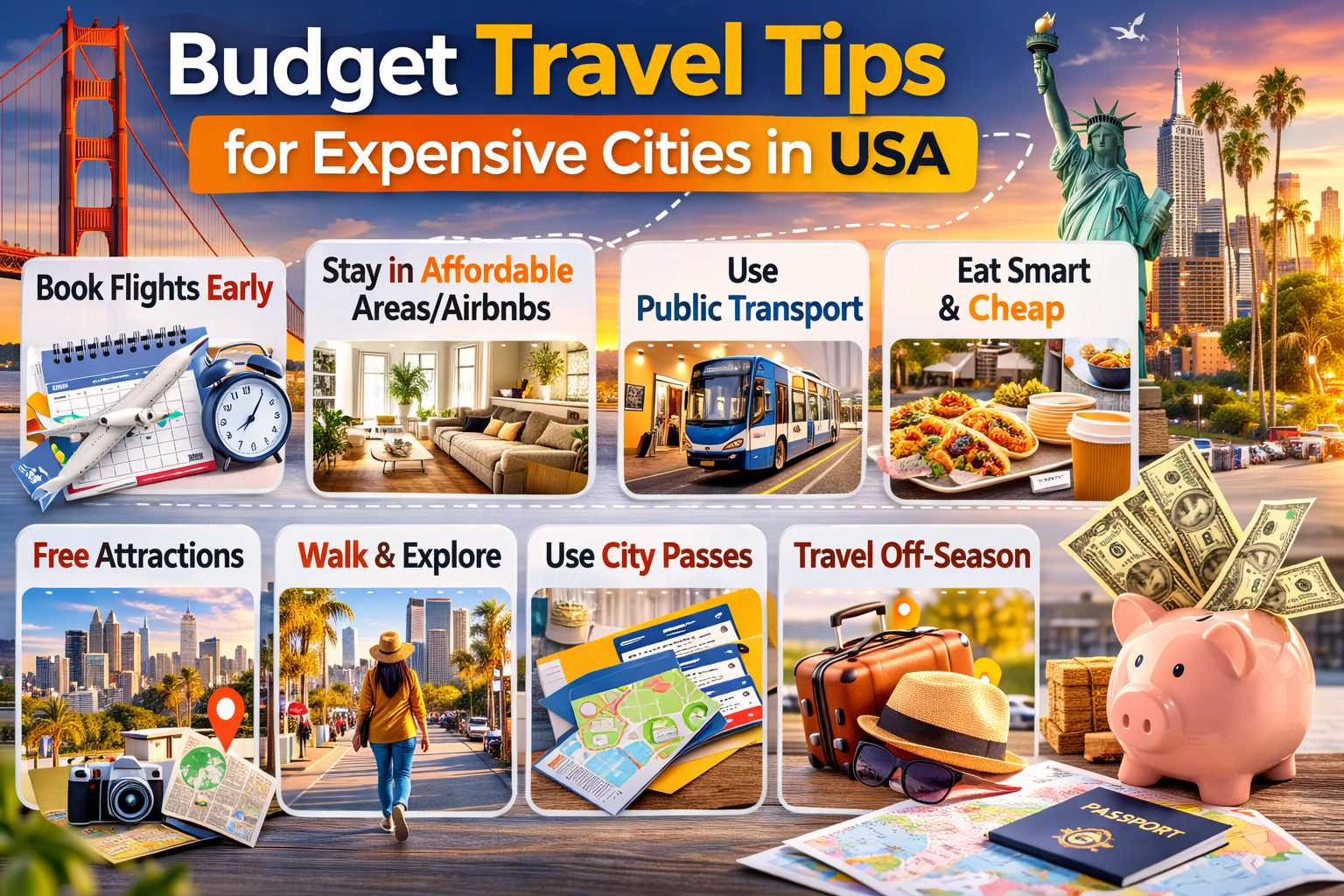
1. The “Border” Stay Strategy
The quickest way to drain your bank account is booking a hotel in Times Square or Fisherman’s Wharf. You aren’t just paying for the room; you’re paying a “convenience tax.”
-
New York City: Instead of Midtown, look at Long Island City (Queens) or Jersey City. You’re a 10-minute subway ride from the action, but you’ll save $100+ per night. Neighborhoods like Washington Heights and Inwood in Upper Manhattan also offer some of the city’s most competitive rates while remaining on the express subway lines.
-
San Francisco: Skip the Union Square hotels and check out the East Bay (Oakland/Berkeley). The BART train is fast, reliable, and drops you right in the heart of SF.
-
Boston: Look toward Quincy or Somerville. The “T” (subway) connects these areas seamlessly to the historic center for a fraction of the cost.
2. Master the 2026 Transit Game
In 2026, the tech-fueled convenience of ridesharing is no longer budget-friendly. Most major U.S. cities have updated their fare structures to favor public transit users.
-
The OMNY “Fare Cap” (NYC): As of January 2026, the NYC subway base fare is $3.00. But here’s the trick: use the same contactless card or phone to “tap and go.” Once you hit 12 rides in a rolling 7-day period, every ride after that is free. Your weekly transit spend is capped at $35, making it the cheapest way to see the city.
-
The Airport Shuffle: Most expensive cities now have dedicated rail links from the airport (like the JFK AirTrain or the LAX FlyAway bus). It might take 20 minutes longer than a taxi, but it saves you $60.
-
Bike Shares: Cities like Chicago and DC have robust bike-share programs (Divvy, Capital Bikeshare). It’s often faster than a car in traffic and costs less than a latte.
3. Eat Like a Local (The “Off-Strip” Rule)
Food is the silent budget killer. To save money, you have to follow one rule: Never eat within three blocks of a major landmark.
-
Lunch is the New Dinner: Most high-end restaurants in cities like Chicago or Seattle offer “Lunch Specials.” You get the same chef and the same quality of food for 40% less than the dinner menu price.
-
The Grocery Store Hack: In 2026, urban grocery stores (Whole Foods, Trader Joe’s, or local bodegas) have incredible “Hot Bar” sections. Grabbing a fresh meal and eating it in a public park is the quintessential budget experience.
-
Food Halls over Restaurants: Look for food halls like Chelsea Market (NYC), Grand Central Market (LA), or Reading Terminal Market (Philly). You get a variety of world-class food without the “sit-down” service fees and heavy tipping expectations.
4. The “Culture for Free” Itinerary
Some of the best things to do in the USA’s most expensive cities don’t cost a cent. You just have to know the schedule.
-
Museum “Free Days”: Many world-class museums have specific “Pay What You Wish” hours. If you’re a Bank of America cardholder, the “Museums on Us” program offers free entry to places like LACMA (LA) and the Met Cloisters (NYC) during the first full weekend of every month.
-
Public Parks are the Real Landmarks: Central Park (NYC), the National Mall (DC), and Golden Gate Park (SF) are free, massive, and offer better people-watching than any paid observation deck.
-
Walking Tours: Look for “Free Tours by Foot.” These are tip-based tours led by locals who actually know the history, rather than a scripted bus tour.
Comparison: Cost Comparison for a Weekend Trip (Est. 2026)
| Expense | “Tourist” Style | “Hustle” Style (Budget) |
| 3 Nights Accommodation | $900 (Downtown Hotel) | $450 (Hostel or Outer Borough) |
| Transportation | $210 (Ubers/Taxis) | $35 (7-Day Transit Pass) |
| Food & Drink | $480 (Sit-down meals) | $200 (Street food/Markets) |
| Attractions | $160 (Paid Tours) | $30 (Free Museums/Parks) |
| TOTAL | $1,750 | $715 |
Frequently Asked Questions (FAQs)
1. What is the cheapest month to visit expensive US cities in 2026?
Generally, late January through early March is the “dead zone.” While the weather might be colder, hotel prices in cities like NYC and Chicago drop by as much as 40-50% compared to the summer or December holidays.
2. Are “City Passes” actually worth the money?
Only if you are a “power sightseer.” If you plan on doing 3+ paid attractions a day, a pass (like CityPASS or Go City) will save you money. If you prefer wandering and only want to see one major museum, pay the individual entry.
3. How do I avoid “Tourist Taxes” on food?
Look for menus that don’t have pictures of the food. Avoid places with “greeters” outside. If you see locals in line at a food truck, that is where you should be eating.
4. Is it safe to stay outside the city center?
In most major cities, the surrounding neighborhoods (like Brooklyn in NYC or West Hollywood in LA) are just as safe—if not safer—than the high-traffic tourist zones. Just check the proximity to the nearest subway or bus line before booking.
5. How much should I tip in the USA in 2026?
Tipping is still a major part of US culture. For sit-down service, 18-20% is standard. You can save significantly by eating at counter-service spots or food halls where tipping is optional or lower.
Resources & References
To keep this guide accurate for 2026, we’ve used:
-
MTA (Metropolitan Transportation Authority) 2026 Fare Guide: For updated $3 base fares and fare-capping rules.
-
Bank of America “Museums on Us” 2026 Partner List: For identifying free cultural entry dates.
-
The Tourists World Travel Insights: For data on shoulder-season flight and lodging trends.
-
UrbanJourney 2026 City Reports: For neighborhood safety and affordability rankings in NYC and San Francisco.


