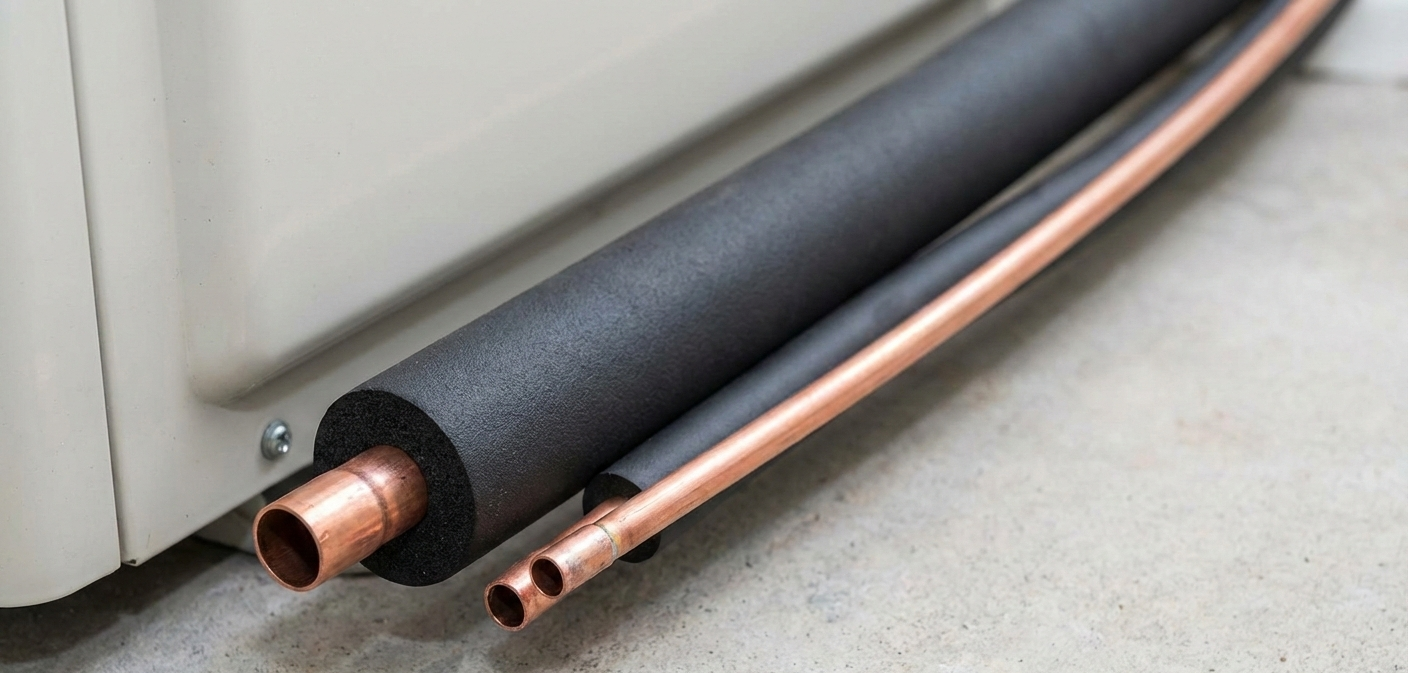
When your air conditioner is running on a scorching summer afternoon, there is a silent hero working behind the scenes to keep you cool: the AC copper pipe. While it might just look like a simple metal tube, this pipe is the “artery” of your cooling system, carrying the lifeblood (refrigerant) that makes air conditioning possible.
If you are planning a new installation or wondering why your AC isn’t cooling as it used to, understanding the quality and type of copper piping used is essential. In this guide, we’ll break down why copper is the gold standard and how to spot common piping problems.
Why Copper? The Science of Cooling
You might wonder why we don’t use cheaper materials like plastic or aluminum for all AC parts. Copper is chosen for three very specific reasons:
-
Thermal Conductivity: Copper is an incredible heat conductor. It allows the refrigerant to absorb and release heat extremely fast, which makes your AC more efficient.
-
Malleability: AC installations often require tight bends around corners or through walls. Copper is flexible enough to be bent (with the right tools) without snapping, yet strong enough to hold its shape.
-
Pressure Resistance: Refrigerants like R-32 or R-410A operate at very high pressures. Copper can handle this internal stress for decades without bursting.
Types of AC Copper Pipes You Should Know
When browsing for pipes or talking to a technician, you’ll likely hear terms regarding “size” and “gauge.” Here is what they actually mean:
1. Pancake Coils (Soft Copper)
These are flexible coils, often sold in 15-meter (50 ft) lengths. They are “annealed,” meaning they have been heat-treated to be soft and bendable. These are most commonly used in split AC installations to connect the indoor unit to the outdoor unit.
2. Hard Straight Lengths
These are rigid pipes that do not bend easily. They are typically used in large commercial VRF/VRV systems or industrial air conditioning where long, straight runs are required.
3. Gauge and Thickness
The “gauge” or wall thickness (like 0.8mm or 1.0mm) is critical.
-
For 5-Star ACs: High-efficiency units often require thicker pipes (often 22 SWG or higher) to handle the higher pressure of modern eco-friendly refrigerants.
-
Standard Units: Usually use 0.7mm to 0.8mm thickness.
Common AC Copper Pipe Problems & Solutions
 Even the best pipes can run into trouble if not installed correctly.
Here are the most common issues:
Problem: Refrigerant Leaks (Gas Leakage)
-
The Cause: Usually occurs at the “flare nut” connection points or due to poor brazing (welding). Sometimes, “formicary corrosion” happens if the copper is of low quality.
-
The Solution: A technician must find the leak using soap bubbles or an electronic leak detector, repair the joint, and vacuum the system before refilling the gas.
Problem: Kinking
-
The Cause: If a technician tries to bend the pipe too sharply by hand without a tube bender, the pipe can “kink” or collapse. This restricts gas flow and can burn out the compressor.
-
The Solution: The kinked section must be cut out and a new piece of pipe must be brazed in its place.
Problem: Sweating (Condensation)
-
The Cause: If the black foam insulation (armstrong sleeve) on the pipe is torn or missing, the cold copper pipe hits the warm air, causing water to drip.
-
The Solution: Ensure the entire length of the AC copper pipe is tightly wrapped in high-quality nitrile foam insulation.
Buying Guide: What to Look for in India
If you are buying pipes from suppliers like those found on IndiaMART (Mandev, Rajco, or Mexflow), keep these specs in mind:
-
Certification: Look for BEE 3-Star or 5-Star rated pipes. These are tested for the high pressures used in modern inverter ACs.
-
Purity: Ensure the pipe is 99.9% Electrolytic Grade Copper. Impurities can lead to early corrosion.
-
Outer Diameter (OD): Standard split ACs usually use a pair of pipes—one 1/4 inch and one 1/2 inch (or 3/8 inch or 5/8 inch depending on the tonnage).
Frequently Asked Questions (FAQs)
Q: Can I use aluminum pipes instead of copper for my AC? A: While aluminum is cheaper, it is much harder to repair if it leaks and has lower heat transfer efficiency. For long-term durability and better cooling, copper is always the better investment.
Q: How many feet of copper pipe are in 1 kilogram? A: This depends on the diameter and thickness. For a standard 1/2 inch pipe with 0.8mm thickness, you typically get about 3.5 to 4 meters per kg.
Q: Does the length of the copper pipe affect cooling? A: Yes. Most manufacturers recommend a minimum of 3 meters (10 ft) for a split AC to ensure the refrigerant cycles properly. If the pipe is too long (over 15-20 meters), cooling efficiency drops, and you may need extra gas.
Q: Why do copper pipes turn black over time? A: This is normal oxidation caused by exposure to air and moisture. It usually doesn’t affect the performance of the pipe unless it is accompanied by deep pitting or green corrosion (verdigris).
Final Thoughts
Investing in high-quality AC copper pipe might seem like an extra expense upfront, but it prevents expensive gas refills and compressor failures down the road. Always ensure your technician uses the correct gauge and provides proper insulation to keep your system running at peak performance.

